

Overview
The Messages is a Composite Component that manages messages for users and groups.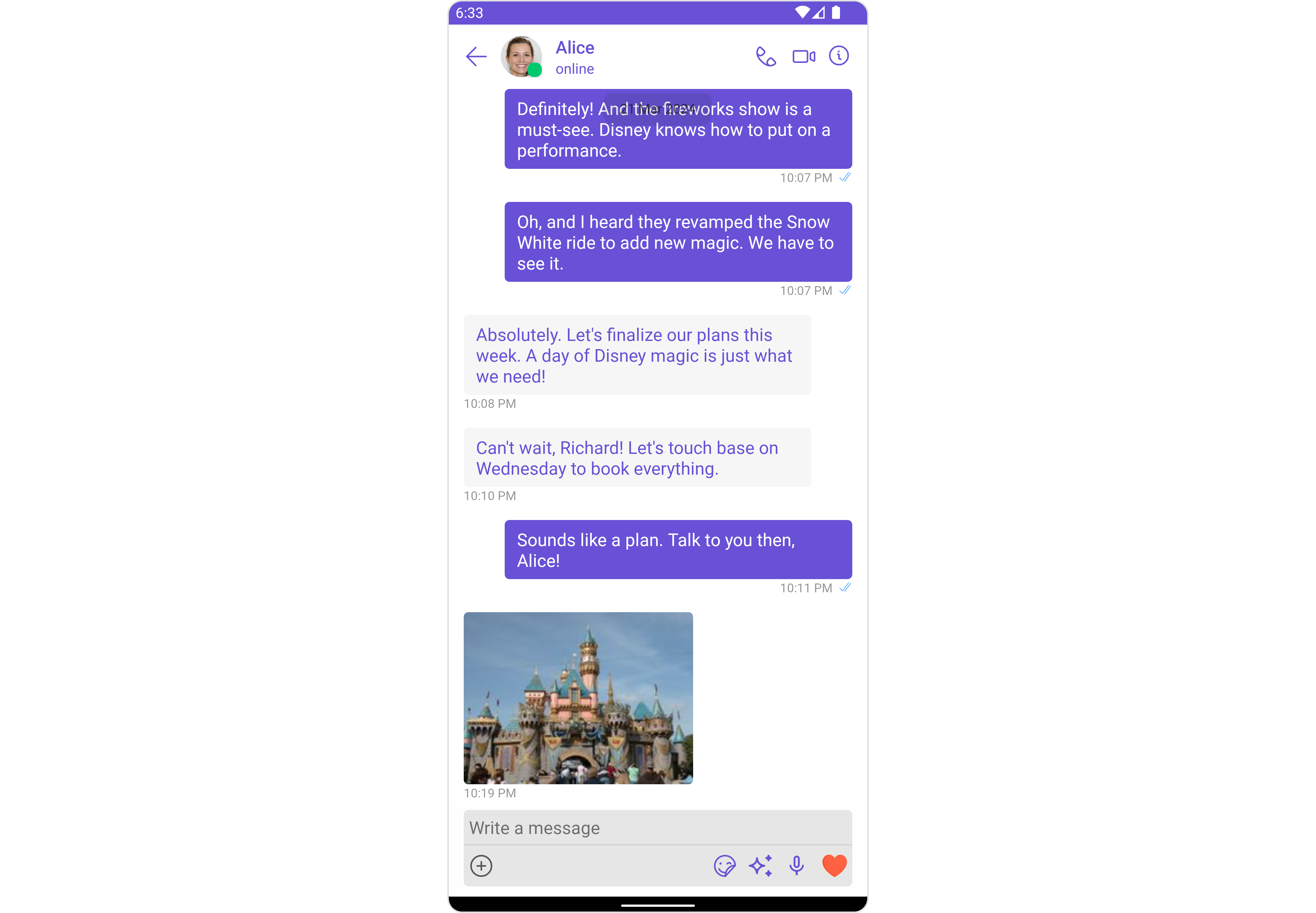
Usage
Integration
The following code snippet illustrates how you can directly incorporate the Messages component into yourlayout.xml file.
Actions
Actions dictate how a component functions. They are divided into two types: Predefined and User-defined. You can override either type, allowing you to tailor the behavior of the component to fit your specific needs. The Messages component does not have its actions. However, since it’s a Composite Component, you can use the actions of its components by utilizing the Configurations object of each component. Example In this example, we are employing the ThreadRepliesClick action from the MessageList Component through the MessageListConfiguration object.- Java
- Kotlin
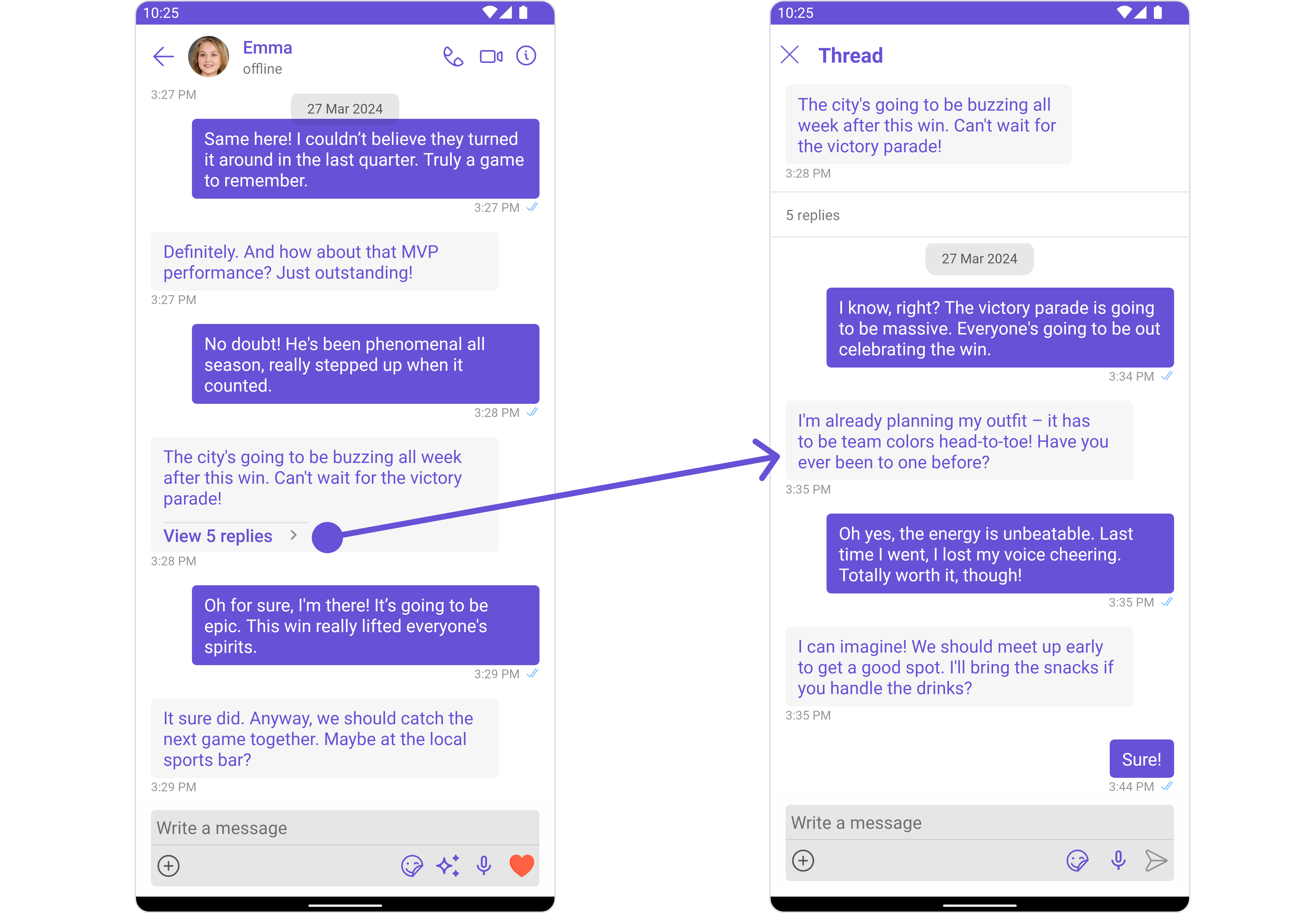
The Messages Component overrides the ThreadRepliesClick action to navigate to the ThreadedMessages component. If you override ThreadRepliesClick, it will also override the default behavior of the Messages Component.
Filters
Filters allow you to customize the data displayed in a list within a Component. You can filter the list based on your specific criteria, allowing for a more customized. Filters can be applied using RequestBuilders of Chat SDK. The Messages component does not have its filters. But as it is a Composite Component, you can use the filters of its components by using the Configurations object of each component. For more details on the filters of its components, please refer to MessageList Filters. Example In this example, we’re applying the MessageList Component filter to the Messages Component usingMessageListConfiguration.
- Java
- Kotlin
Events
Events are emitted by aComponent. By using event you can extend existing functionality. Being global events, they can be applied in Multiple Locations and are capable of being Added or Removed.
The list of events emitted by the Messages component is as follows.
Adding
CometChatMessageEvents Listener’s
- Java
- Kotlin
CometChatMessageEvents Listener’s
- Java
- Kotlin
Customization
To fit your app’s design requirements, you can customize the appearance of the conversation component. We provide exposed methods that allow you to modify the experience and behavior according to your specific needs.Style
Using Style you can customize the look and feel of the component in your app, These parameters typically control elements such as the color, size, shape, and fonts used within the component.1. Messages Style
You can customize the appearance of the Messages Component by applying the MessagesStyle to it using the following code snippet.- Java
- Kotlin
2. Component’s Styles
Being a Composite component, the Messages Component allows you to customize the styles of its components using their respective Configuration objects. For a list of all available properties, refer to each component’s styling documentation: MesssageHeader Styles, MessageList Styles, MessageComposer Styles, Details Styles, ThreadMessages Styles. Example In this example, we are creatingMessageListStyle and MessageComposerStyle and then applying them to the Messages Component using MessageListConfiguration and MessageComposerConfiguration.
- Java
- Kotlin
Functionality
These are a set of small functional customizations that allow you to fine-tune the overall experience of the component. With these, you can change text, set custom icons, and toggle the visibility of UI elements.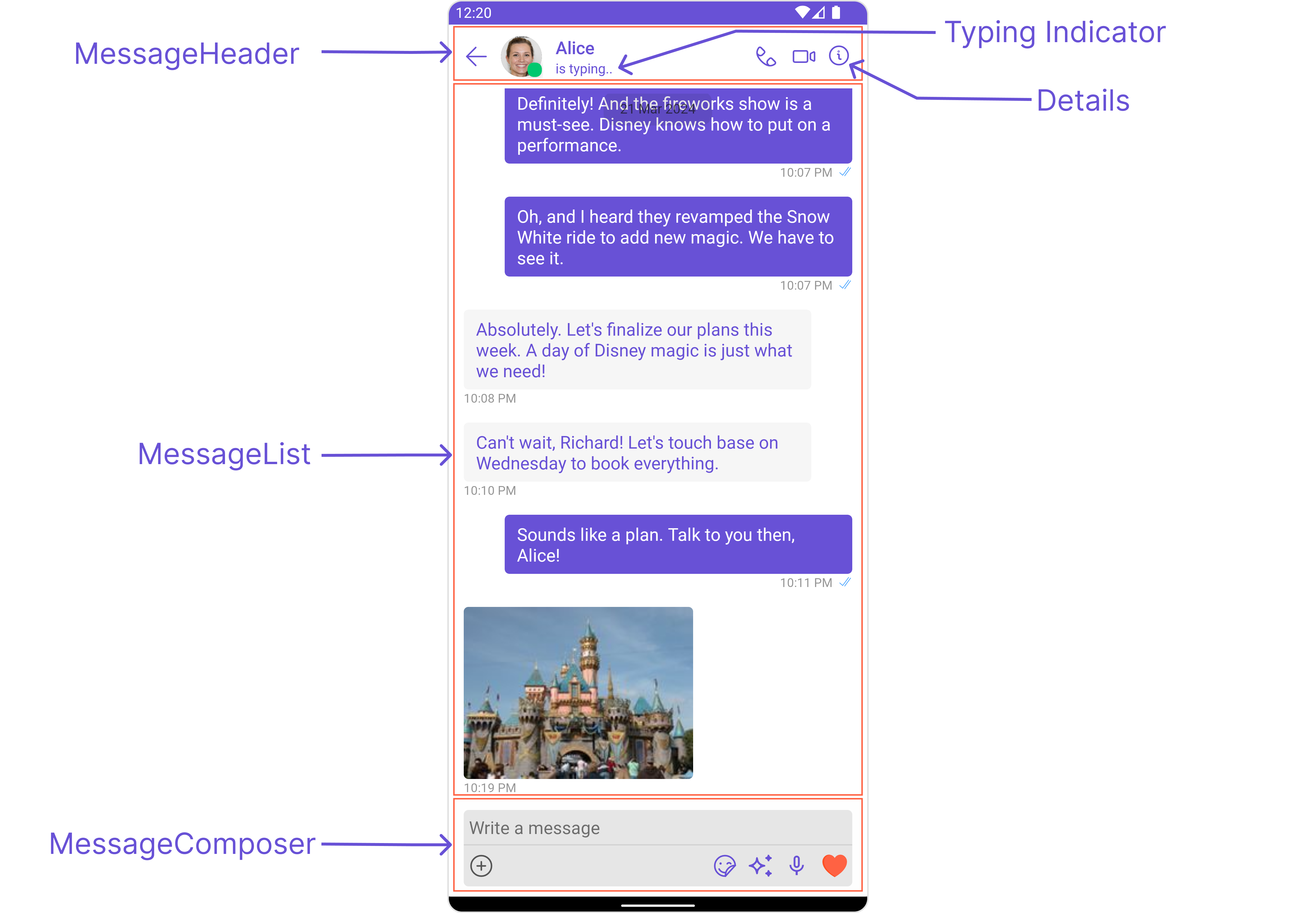
- Java
- Kotlin
Advanced
For advanced-level customization, you can set custom views to the component. This lets you tailor each aspect of the component to fit your exact needs and application aesthetics. You can create and define your views, layouts, and UI elements and then incorporate those into the component.MessageHeaderView
You can set your custom message header view using thesetMessageHeaderView() method. But keep in mind, by using this you will override the default message header functionality.
- Java
- Kotlin
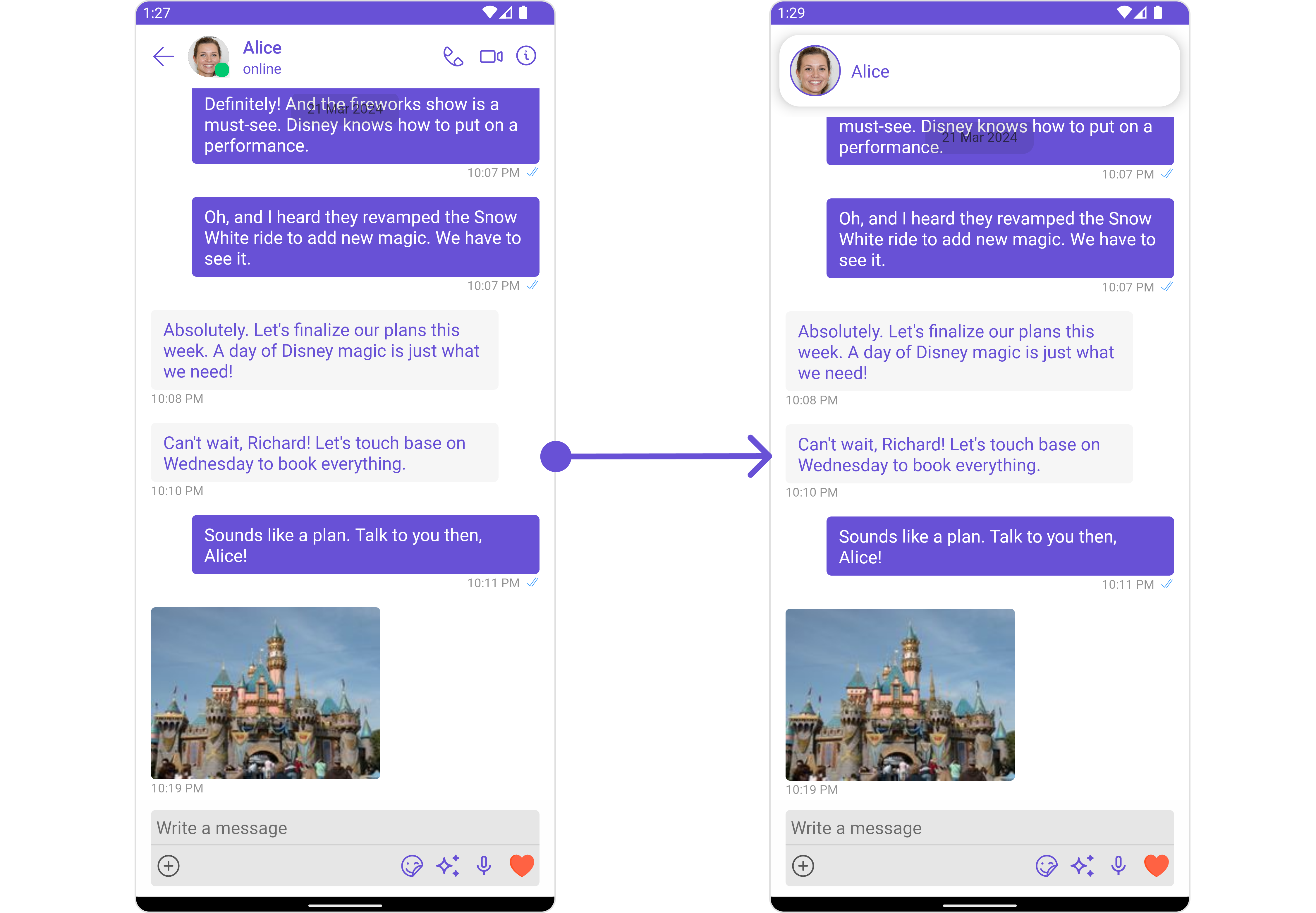
custom_header_view.xml and inflate it inside the setMessageHeaderView() method.
custom_header_view.xml
- Java
- Kotlin
setMessageListView
You can set your custom message list view using thesetMessageListView() method. But keep in mind, by using this you will override the default message ListView functionality.
- Java
- Kotlin
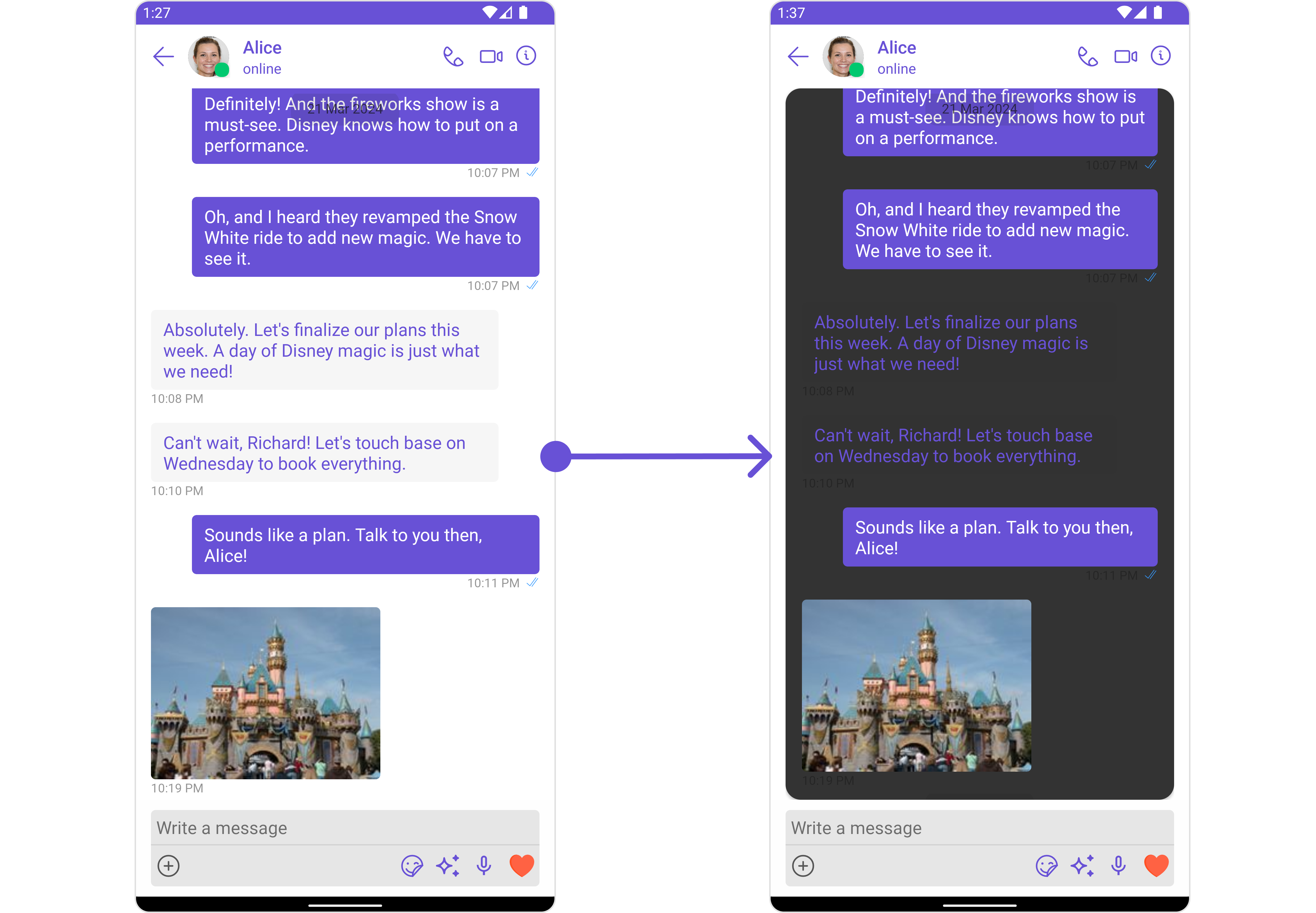
custom_messages_list_layout.xml and inflate it inside the setMessageListView() method.
custom_messages_list_layout.xml
- Java
- Kotlin
setMessageComposerView
You can set your custom Message Composer view using thesetMessageComposerView() method. But keep in mind, by using this you will override the default message composer functionality.
- Java
- Kotlin
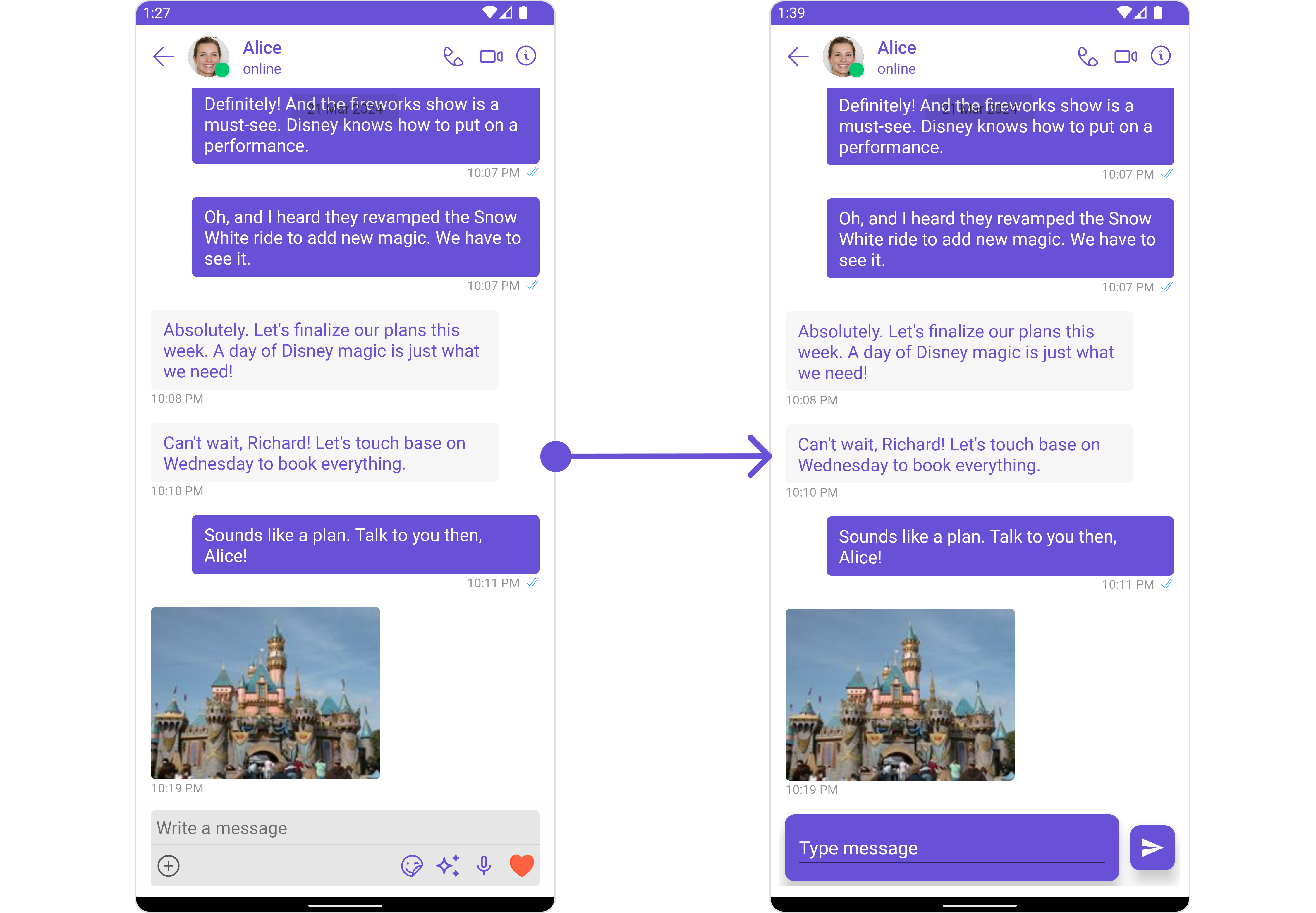
custom_composer_view_layout.xml and inflate it inside the setMessageComposerView() method.
custom_composer_view_layout.xml
- Java
- Kotlin
setAuxiliaryHeaderMenu
You can set a custom header menu option by using thesetAuxiliaryHeaderMenu() method.
- Java
- Kotlin
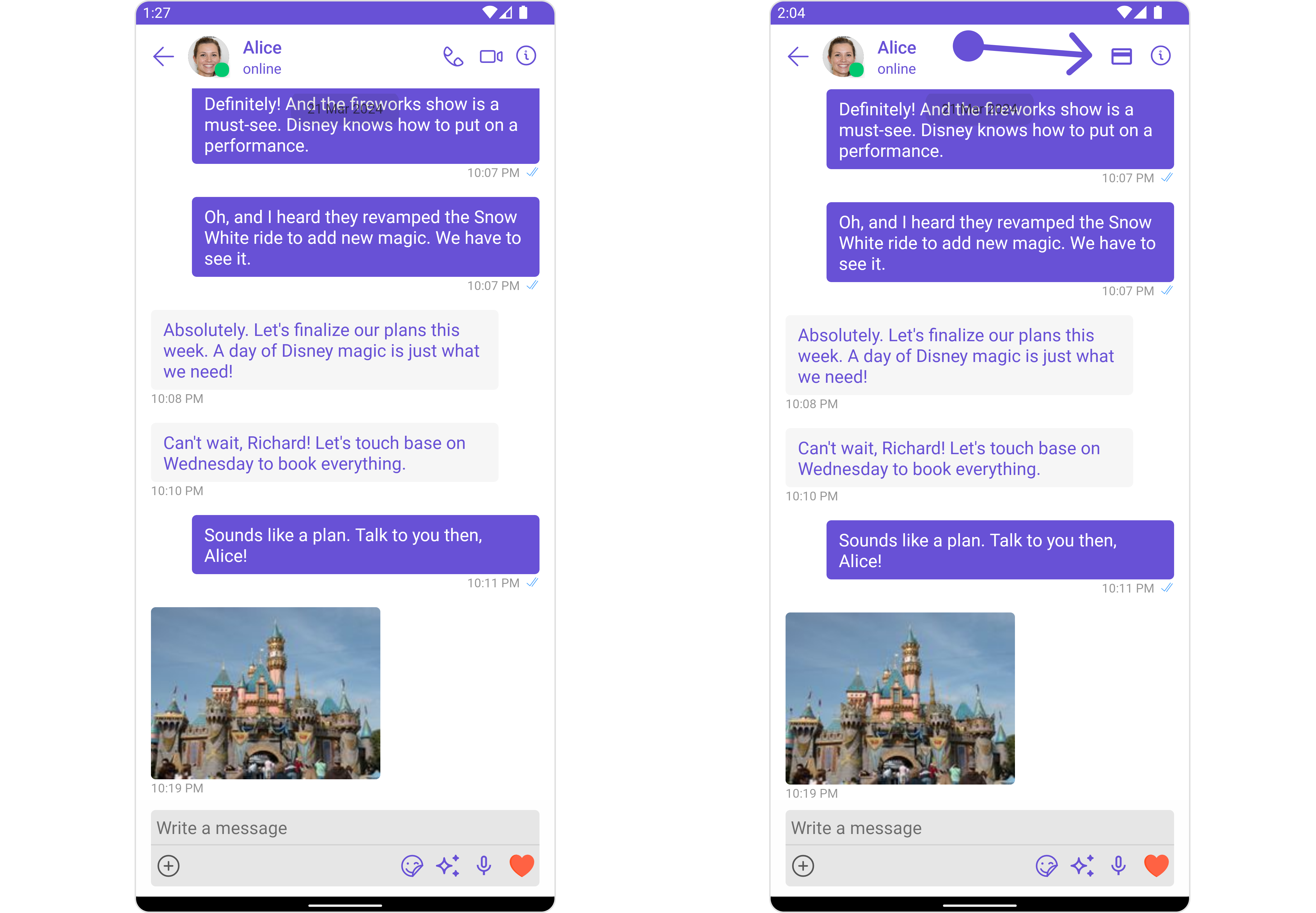
.setAuxiliaryHeaderMenu()
- Java
- Kotlin
setAuxiliaryHeaderMenu() method to establish its default functionality. By setting an Auxiliary Menu, the Messages Component gains the capability to navigate to the Details section.
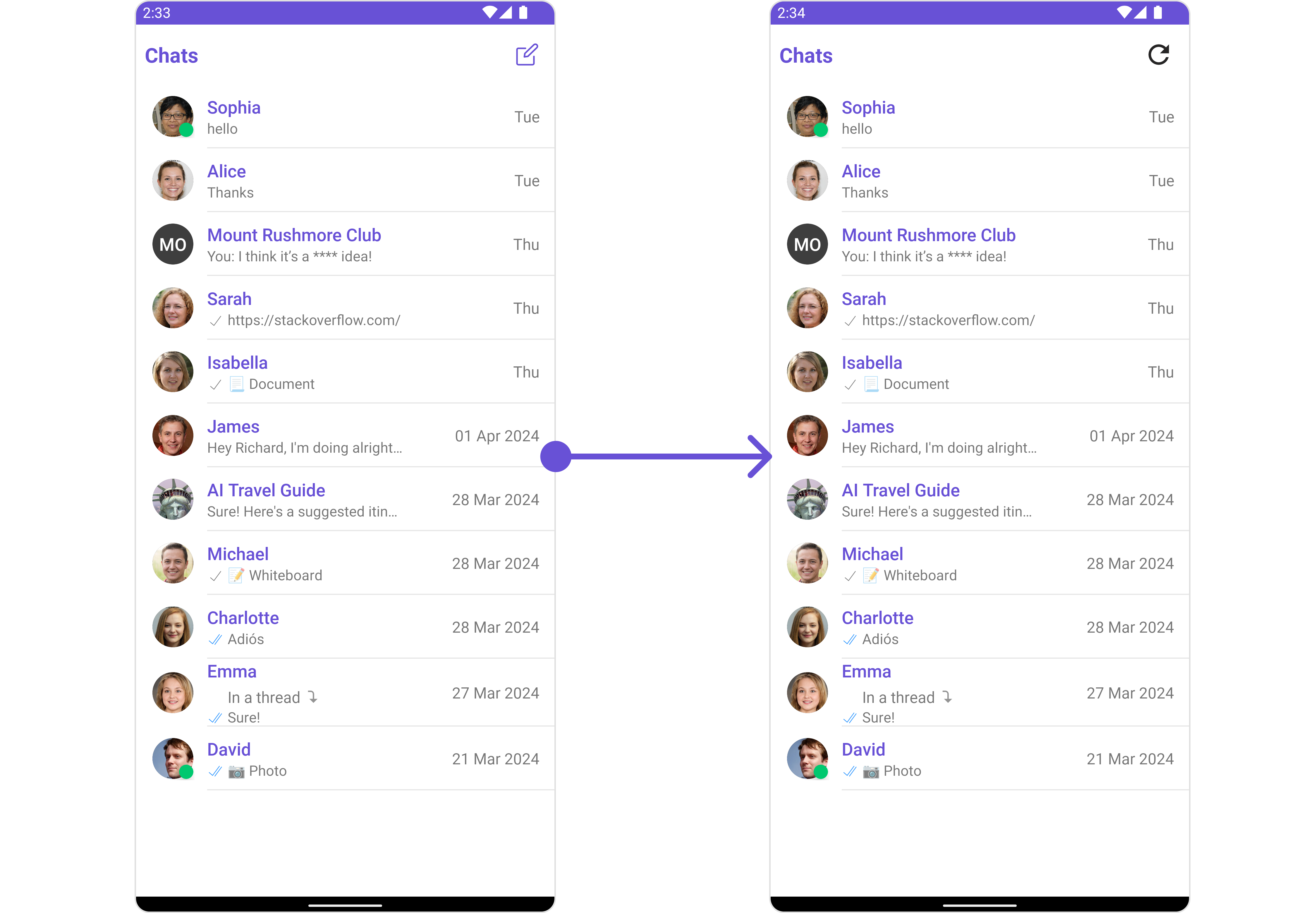
Configuration
Configurations offer the ability to customize the properties of each individual component within a Composite Component. The Messages Component is a Composite Component and it has a specific set of configuration for each of its components.MessageHeader
If you want to customize the properties of the MessageHeader Component inside Messages Component, you need use theMessageHeaderConfiguration object.
- Java
- Kotlin
MessageHeaderConfiguration provides access to all the Action, Filters, Styles, Functionality, and Advanced properties of the MessageHeader component.
Please note that the properties marked with the 🛑 symbol are not accessible within the Configuration Object.Example
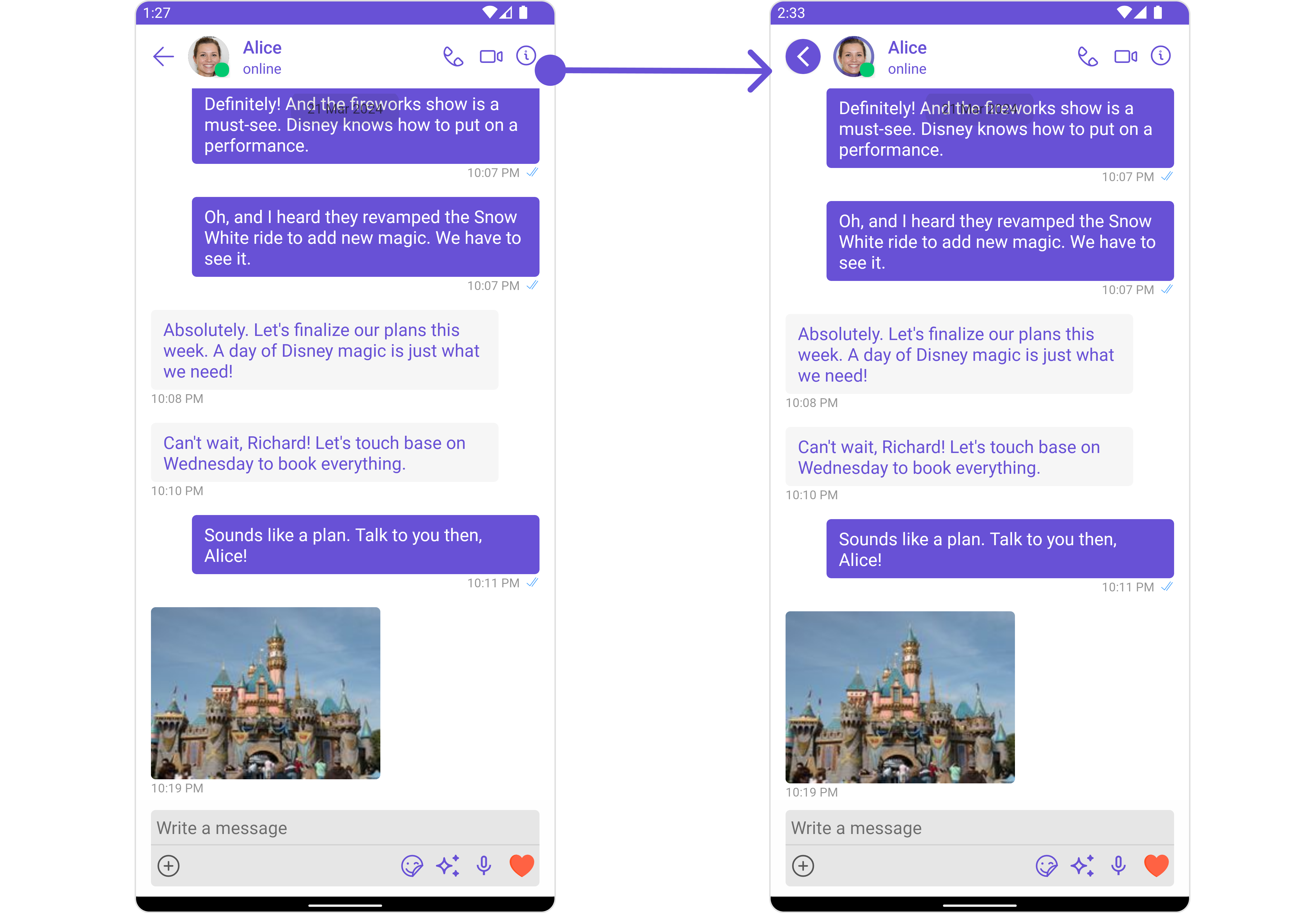
MessageHeaderConfiguration.
- Java
- Kotlin
MessageList
If you want to customize the properties of the MessageList Component inside Messages Component, you need use theMessageListConfiguration object.
- Java
- Kotlin
MessageListConfiguration provides access to all the Action, Filters, Styles, Functionality, and Advanced properties of the MessageList component.
Please note that the properties marked with the 🛑 symbol are not accessible within the Configuration Object.Example
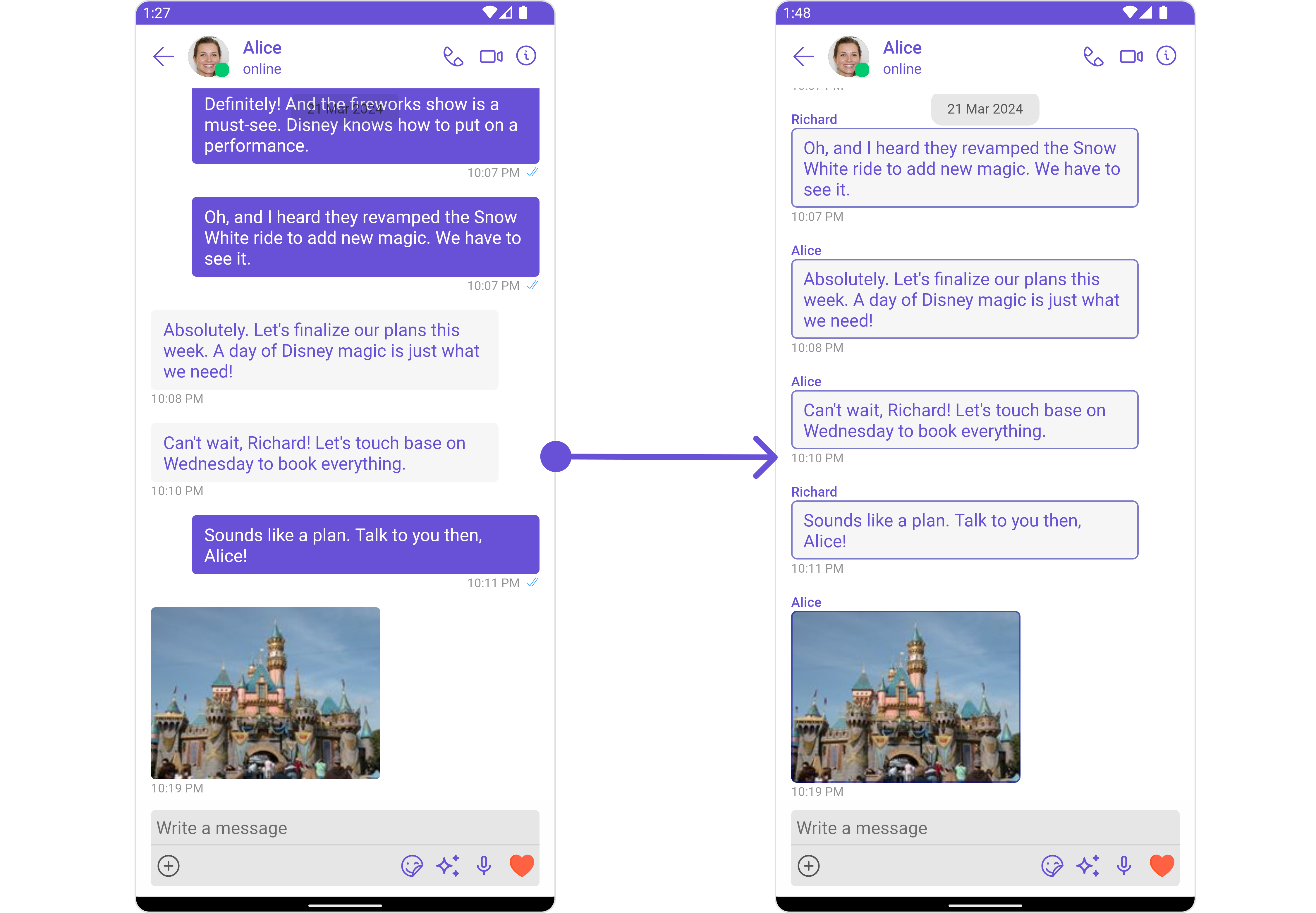
MessageListConfiguration.
- Java
- Kotlin
MessageComposer
If you want to customize the properties of the MessageComposer Component inside Messages Component, you need use theMessageComposerConfiguration object.
- Java
- Kotlin
MessageComposerConfiguration provides access to all the Action, Filters, Styles, Functionality, and Advanced properties of the MessageComposer component.
Please note that the properties marked with the 🛑 symbol are not accessible within the Configuration Object.Example
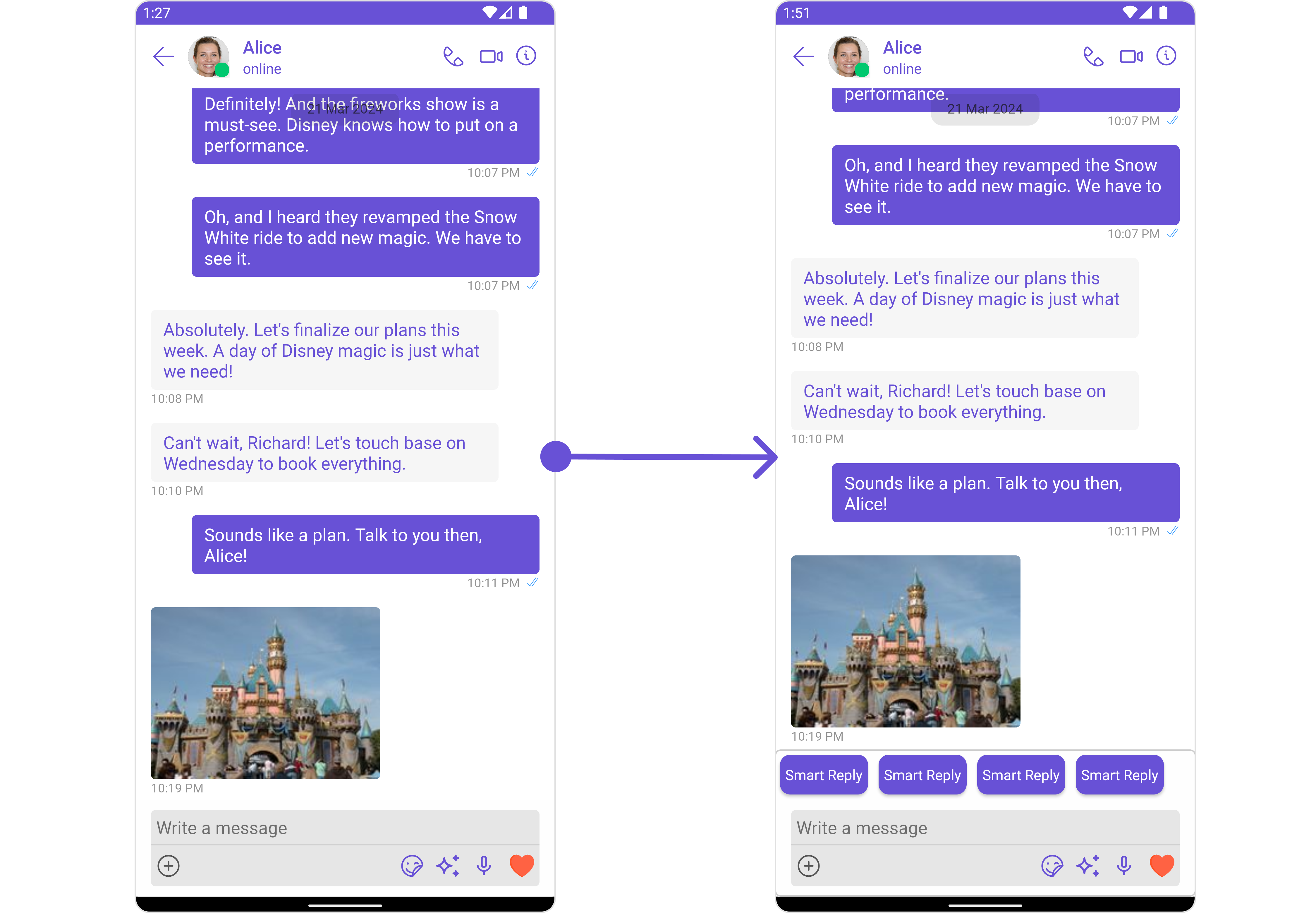
MessageComposerConfiguration.
- Java
- Kotlin
ThreadedMessages
If you want to customize the properties of the ThreadedMessages Component inside Messages Component, you need use theThreadedMessagesConfiguration object.
- Java
- Kotlin
ThreadedMessagesConfiguration provides access to all the Action, Filters, Styles, Functionality, and Advanced properties of the ThreadedMessages component.
Please note that the properties marked with the 🛑 symbol are not accessible within the Configuration Object.Example
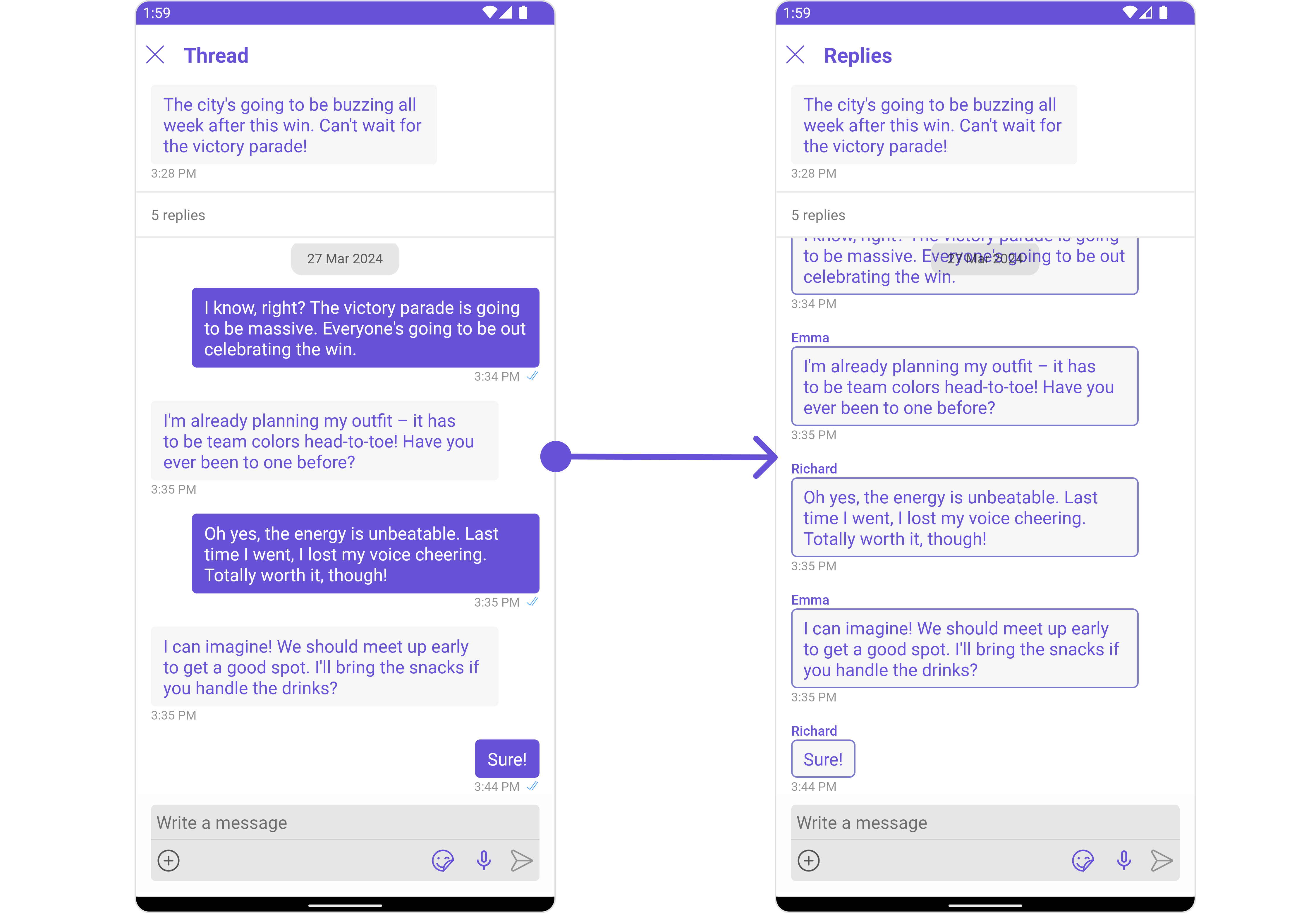
MessageListConfiguration. We then apply these changes to the ThreadedMessages component using ThreadedMessagesConfiguration.
- Java
- Kotlin